

Principle and Working Scenario Characteristics of Calcite Pneumatic Conveying Equipment
Calcite, a common calcium carbonate mineral, is widely used in various industries such as construction, pharmaceuticals, and chemical manufacturing. The efficient and reliable transportation of calcite powder is crucial for industrial processes, and pneumatic conveying equipment has emerged as a key solution for handling this material. This article explores the fundamental principles of calcite pneumatic conveying systems and highlights the specific working scenario characteristics that make them suitable for calcite processing applications.
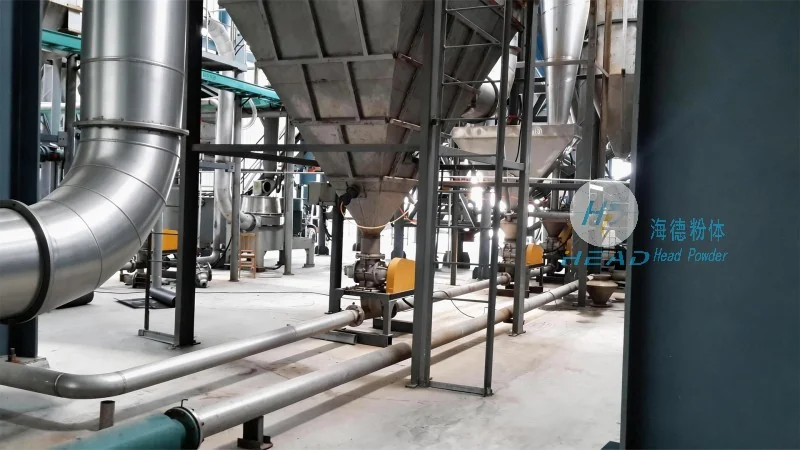
HeadPowder, a leading manufacturer based in Shandong, China, specializes in designing and manufacturing advanced pneumatic conveying equipment tailored for calcite and other fine powders. The company's expertise lies in understanding the unique properties of calcite, including its particle size, moisture content, and flow characteristics, which are critical factors in optimizing the performance of pneumatic conveying systems.
The core principle of pneumatic conveying involves the movement of solid particles (calcite powder) suspended in a moving gas stream. This can be achieved through two primary methods: pressure conveying and suction conveying. In pressure conveying, a positive pressure is maintained throughout the system, typically using a positive displacement blower or a rotary lobe pump. The gas is forced through the conveying line, carrying the calcite particles from the source to the destination. This method is suitable for long-distance and high-capacity applications, as it can handle larger particle sizes and higher flow rates. On the other hand, suction conveying operates under negative pressure, using a vacuum pump to draw the material from the source into the conveying line. This approach is ideal for short-distance or low-capacity applications, where the material is to be transferred from a hopper or a storage silo to a processing unit.

For calcite, which is often in the form of fine powder with a relatively low bulk density, pressure conveying is generally preferred due to its ability to handle high flow rates and maintain consistent material transport. The design of the conveying system, including the selection of the gas velocity, pipe diameter, and the use of appropriate fittings and valves, is crucial to prevent particle segregation, agglomeration, and blockages. HeadPowder's engineers carefully calculate the required gas velocity to ensure that the calcite particles remain suspended in the gas stream without settling or causing pressure drops that could lead to system inefficiencies.
Working scenario characteristics play a significant role in the selection and operation of calcite pneumatic conveying equipment. One key scenario is the transfer of calcite from a storage silo to a processing plant. In this case, the equipment must be able to handle the material's tendency to form bridging or rathole in the silo, which can impede the flow. HeadPowder's solutions often include aeration systems or vibrators to break down these flow obstructions, ensuring a continuous and stable supply of calcite to the conveying line. Another scenario involves the transport of calcite from a grinding mill to a packaging unit. Here, the equipment must be able to handle the high temperature and moisture content of the material, which can affect its flowability. The use of insulated pipes and moisture control measures in the system helps maintain the material's quality and prevent caking or clumping.
In industrial applications, the efficiency and reliability of calcite pneumatic conveying systems are directly linked to the system's ability to handle the material's specific properties. HeadPowder's equipment is designed with features such as flexible hoses for easy installation and maintenance, and advanced control systems that monitor pressure, flow rate, and particle size distribution. These features help operators maintain optimal operating conditions, reduce downtime, and ensure consistent product quality. For example, in a pharmaceutical plant where calcite is used as an excipient, the system must meet stringent standards for cleanliness and particle size uniformity. HeadPowder's solutions incorporate sanitary design elements and high-efficiency filtration to meet these requirements, ensuring that the calcite powder is free from contaminants and has a consistent particle size distribution.

Furthermore, the working scenario characteristics of calcite pneumatic conveying systems are influenced by the environmental conditions in which they operate. In outdoor applications, such as in mining or construction sites, the equipment must be protected from dust, moisture, and extreme temperatures. HeadPowder's equipment is constructed with durable materials and weather-resistant coatings to withstand these conditions. In indoor applications, such as in food or pharmaceutical processing facilities, the equipment must be designed to meet strict hygiene and safety standards. The use of stainless steel components, easy-to-clean surfaces, and sealed systems helps maintain a clean environment and prevent cross-contamination.
Overall, the principle and working scenario characteristics of calcite pneumatic conveying equipment are closely tied to the material's properties and the specific requirements of the industrial application. HeadPowder's expertise in designing and manufacturing customized pneumatic conveying systems ensures that calcite is transported efficiently, reliably, and safely. By understanding the unique challenges of calcite processing, HeadPowder provides solutions that enhance productivity, reduce costs, and improve product quality. The company's commitment to innovation and customer satisfaction has made it a trusted partner for businesses in the calcite and related industries, helping them achieve their operational goals with advanced pneumatic conveying technology.