

Operation Process and Working Principle of Air-Driven Transport of Vitrified Microsphere Materials
HeadPowder, a leading enterprise in the field of powder processing technology, specializes in the design, manufacturing, and application of advanced air-driven transport systems for vitrified microsphere materials. Located in Shandong, China, the company leverages its expertise to provide efficient and reliable solutions for material handling in various industrial sectors. This article delves into the operational process and working principles of air-driven transport for vitrified microspheres, highlighting the key components, mechanisms, and benefits of such systems.

Company Overview and Expertise
Shandong HeadPowder Engineering Co., Ltd. (hereinafter referred to as HeadPowder) is a professional manufacturer and supplier dedicated to the development of innovative powder processing equipment. With a strong focus on research and development, HeadPowder has established itself as a trusted partner for industries requiring high-performance material transport solutions. The company’s headquarters is situated in Shandong, China, where it operates state-of-the-art facilities to ensure the quality and reliability of its products. HeadPowder’s commitment to technological advancement and customer satisfaction drives its continuous improvement in air-driven transport systems for vitrified microspheres.
Understanding Vitrified Microspheres
Vitrified microspheres are a type of lightweight, inorganic powder commonly used as a thermal insulation material in construction and other industrial applications. These microspheres are typically produced through a glass-forming process, resulting in a spherical shape with a high degree of vitrification. The unique properties of vitrified microspheres, including low thermal conductivity and excellent fire resistance, make them ideal for applications where thermal insulation and lightweight construction are critical. In the context of air-driven transport, the handling of these materials requires specialized equipment to maintain their integrity and prevent degradation during the transport process.

Key Components of Air-Driven Transport Systems
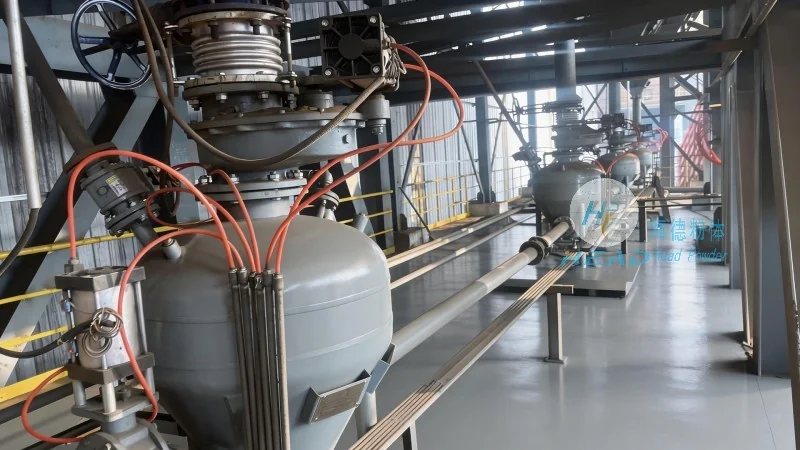
The air-driven transport system for vitrified microspheres consists of several critical components that work in concert to ensure efficient material handling. The primary components include a material hopper, a rotary valve or feeder, a pipeline system, a blower or air compressor, and a dust collector or filter. The material hopper is designed to store the vitrified microspheres and feed them into the system at a controlled rate. The rotary valve or feeder regulates the flow of material from the hopper to the pipeline, ensuring a consistent and uniform feed. The pipeline system, typically made of stainless steel or other corrosion-resistant materials, transports the material through the system. The blower or air compressor provides the necessary air pressure to move the material along the pipeline. Finally, the dust collector or filter removes any airborne particles, ensuring compliance with environmental regulations and maintaining the quality of the transported material.
Working Principle of Air-Driven Transport
The working principle of air-driven transport for vitrified microspheres is based on the use of air as the conveying medium. The process begins with the material being fed from the hopper into the pipeline through the rotary valve. Simultaneously, the blower generates a high-pressure air stream that travels through the pipeline. As the air flows, it entrains the vitrified microspheres, creating a mixture of air and material known as a "slurry" or "conveyed stream." The air pressure and velocity are carefully controlled to ensure that the microspheres are transported without damage or degradation. The pipeline design, including bends and fittings, is optimized to minimize pressure loss and maintain the stability of the conveyed stream. At the destination point, the material is separated from the air using a cyclone separator or other separation equipment, and the air is then filtered and discharged. This separation process allows the vitrified microspheres to be collected and used in their intended applications, while the air is cleaned and returned to the system or released safely.

Operational Process of the Transport System
The operational process of an air-driven transport system for vitrified microspheres involves several sequential steps that ensure smooth and efficient material handling. The process starts with the loading of the hopper with the vitrified microspheres. The rotary valve is then activated to control the flow rate of the material into the pipeline. The blower is started, and the air pressure is adjusted to the optimal level for conveying the material. As the material is conveyed through the pipeline, it passes through any necessary processing steps, such as mixing or blending with other materials. The system is monitored continuously to ensure that the flow rate, air pressure, and material quality are within the desired parameters. Any deviations are detected and corrected by the control system, which adjusts the feeder speed or air pressure as needed. The material is then discharged at the destination point, where it is collected in a storage bin or directly fed into the next production step. The entire process is automated to minimize human intervention and maximize efficiency, with the system operating continuously as long as the material supply is available.
Benefits and Applications of Air-Driven Transport for Vitrified Microspheres
The use of air-driven transport systems for vitrified microspheres offers several advantages over traditional material handling methods. One of the primary benefits is the ability to transport the material over long distances without the need for mechanical conveyors, which can be costly and difficult to install. The system is also highly flexible, allowing for changes in the transport route or destination without major modifications. Additionally, air-driven transport minimizes material degradation, as the microspheres are not subjected to the friction and impact associated with mechanical conveyors. This is particularly important for vitrified microspheres, which are sensitive to damage that could affect their thermal insulation properties. The system is widely used in the construction industry for transporting thermal insulation materials to building sites, as well as in other industrial applications where lightweight and fire-resistant materials are required.