

Principle and Classification Application of Calcined Ash Pneumatic Conveying
Calcined ash, a byproduct of industrial processes such as coal combustion, poses unique challenges in material handling due to its fine particle size and potential for dust generation. Pneumatic conveying systems have emerged as an efficient and reliable solution for transporting calcined ash from production sites to storage or processing facilities. This article explores the fundamental principles of calcined ash pneumatic conveying, categorizes the different types of systems available, and discusses their practical applications in industrial settings.

1. Basic Principle of Pneumatic Conveying for Calcined Ash
The core principle of pneumatic conveying is the use of air or gas to transport solid particles through a pipeline. In the context of calcined ash, this involves creating a flow of air that lifts and moves the fine particles. The process typically relies on either pressure or vacuum to generate the necessary force for material transport. The efficiency of the system depends on factors such as the ash's particle size distribution, moisture content, and the system's design parameters. A well-designed pneumatic conveying system can effectively handle calcined ash without the need for mechanical components like belts or buckets, reducing maintenance and operational costs.
2. Classification of Pneumatic Conveying Systems for Calcined Ash
Pneumatic conveying systems for calcined ash are broadly classified into two main categories: dilute-phase and dense-phase systems. Each type has distinct characteristics and is suited for different operational requirements.
2.1 Dilute-Phase Pneumatic Conveying
Dilute-phase systems operate by moving particles in a relatively low concentration within the air stream. This method is ideal for short to medium-distance transport and is commonly used when the ash particles are relatively fine and require minimal pressure. The system typically uses a positive pressure blower to generate the air flow, ensuring the particles are suspended and transported efficiently. Dilute-phase conveying is particularly effective for calcined ash with a particle size range of 10 to 200 microns, as it can maintain a stable flow without clogging the pipeline.
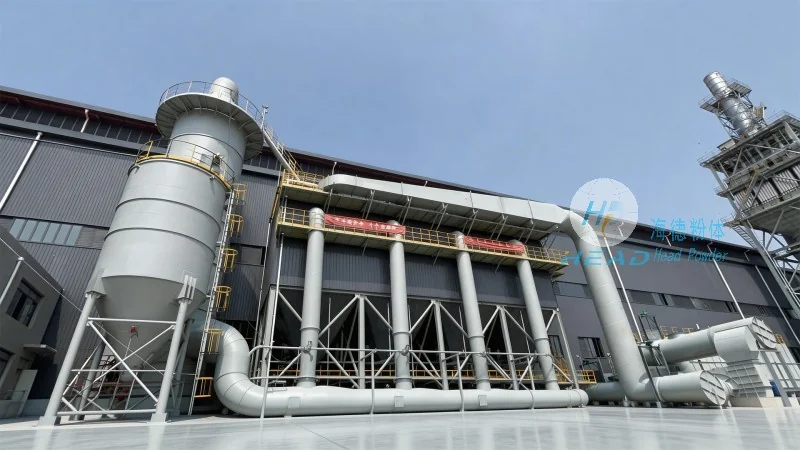
2.2 Dense-Phase Pneumatic Conveying
Dense-phase systems, also known as low-pressure or carrier gas systems, transport particles at a higher concentration, often with a higher air-to-solid ratio. This approach is suitable for longer distances and when the ash particles are larger or more abrasive. The system uses a lower air velocity to move the particles, reducing the risk of wear and tear on the pipeline and equipment. Dense-phase conveying is particularly advantageous for calcined ash with higher moisture content or more challenging particle characteristics, as it can maintain a consistent flow and minimize dust emissions.
3. Practical Applications of Calcined Ash Pneumatic Conveying
The application of pneumatic conveying systems for calcined ash varies based on the specific requirements of the industrial process. Some common applications include:
3.1 Transport from Calcination Furnaces to Storage Silos
After calcination, ash is often collected in a hopper and needs to be transported to a storage silo for further use or disposal. Pneumatic conveying systems provide a direct and efficient method to move the ash from the furnace to the silo, minimizing the risk of dust exposure and ensuring a continuous flow. The system can be designed to handle large volumes of ash, making it suitable for high-throughput industrial operations.
3.2 Material Transfer in Recycling Processes
In recycling facilities, calcined ash may be used as a raw material for other products, such as cement or concrete. Pneumatic conveying systems enable the transfer of ash from storage silos to processing equipment, ensuring a consistent supply of material. This application requires a system that can handle varying particle sizes and moisture levels, as the ash may have been exposed to different environmental conditions.

3.3 Dust Collection and Handling in Industrial Plants
Many industrial plants use pneumatic conveying systems as part of their dust collection and handling processes. The system can capture ash particles from the air and transport them to a designated storage area, reducing the risk of environmental contamination and improving workplace safety. This application often involves a combination of vacuum and pressure systems to ensure effective collection and transport.
4. Factors Influencing the Selection of Pneumatic Conveying Systems
The choice of pneumatic conveying system for calcined ash depends on several key factors, including the distance of transport, the particle size and density of the ash, and the required flow rate. Other considerations include the system's energy efficiency, maintenance requirements, and the need for dust control. Companies like Shandong HeadPowder Engineering Co., Ltd. (headpowder) specialize in designing and manufacturing customized pneumatic conveying systems tailored to the specific needs of their clients. Their expertise in material handling and industrial engineering ensures that the selected system meets the operational and safety requirements of the application.
5. Conclusion
Pneumatic conveying systems offer a versatile and efficient solution for handling calcined ash in various industrial applications. By understanding the basic principles and categorizing the different system types, industries can select the most appropriate solution for their specific needs. The integration of advanced design and engineering, as provided by companies like Shandong HeadPowder Engineering Co., Ltd., ensures that calcined ash is transported safely, reliably, and cost-effectively. As the demand for sustainable material handling solutions grows, pneumatic conveying will continue to play a crucial role in the efficient management of calcined ash and other industrial byproducts.