

Preventing Pipeline Blockages in Pneumatic Conveying Systems for Foam Plastic: Key Design Parameters
When handling foam plastic materials, pneumatic conveying systems offer an efficient method for transporting these lightweight, often irregularly shaped products. However, the unique properties of foam plastic—such as low density, high air permeability, and variable particle size—can lead to common issues like pipeline blockages if not properly managed. Blockages not only disrupt production flow but also increase maintenance costs and reduce system efficiency. This article explores the critical design parameters that help prevent blockages in pneumatic conveying systems specifically for foam plastic applications, with insights from Shandong HeadPowder Engineering Co., Ltd., a leading provider in the field.

Understanding the Challenges of Foam Plastic in Pneumatic Conveying
Before delving into solutions, it’s essential to understand why foam plastic poses unique challenges in pneumatic conveying. Foam materials are typically lightweight and have a high surface area to volume ratio, which can cause them to cling to pipe walls or settle unevenly. Additionally, their low bulk density means that the conveying air velocity must be carefully controlled to maintain proper flow without causing excessive pressure drops or turbulence. These factors make it crucial to optimize system design to accommodate the material’s characteristics.

Key Design Parameters for Preventing Blockages in Foam Plastic Conveying
Several key design parameters are critical in preventing blockages in pneumatic conveying systems for foam plastic. These parameters are tailored to the material’s properties and the system’s operational requirements, ensuring smooth and continuous material transport.

- Air Velocity and Pressure: The air velocity within the pipeline is a primary factor in preventing blockages. For foam plastic, a higher air velocity is generally required compared to denser materials to maintain the material in suspension. However, excessive velocity can lead to increased pressure drops and potential wear on components. Shandong HeadPowder Engineering Co., Ltd. recommends maintaining an air velocity of 20-30 m/s for most foam plastic applications, which balances material suspension with energy efficiency.
- Pipeline Sizing and Layout: The diameter and layout of the conveying pipeline significantly impact the risk of blockages. Larger diameter pipes reduce the risk of material settling and blockages, as they provide more space for the material to flow freely. Additionally, the pipeline should be designed with gentle curves and minimal changes in direction to avoid turbulence and material accumulation. The company emphasizes the importance of using smooth, corrosion-resistant materials for the pipeline, such as stainless steel or PVC, to prevent material adhesion.
- Material Feed and Conditioning: Proper feeding and conditioning of the foam plastic are essential to prevent blockages at the inlet of the conveying system. The material should be fed in a consistent, controlled manner to avoid overloading the system. Conditioning, such as pre-drying or pre-feeding with a small amount of carrier material, can also help improve flow characteristics and reduce the likelihood of blockages. Shandong HeadPowder Engineering Co., Ltd. often incorporates feed hoppers with vibration or agitator systems to ensure uniform material discharge.
- System Pressure and Vacuum Control: The pressure and vacuum levels within the pneumatic conveying system must be carefully managed. For positive pressure systems, maintaining a consistent pressure gradient is crucial to prevent material stagnation. For vacuum systems, ensuring adequate suction power and avoiding excessive vacuum can prevent the material from being drawn too quickly and causing blockages. The company’s designs often include pressure sensors and vacuum control valves to monitor and adjust system conditions in real-time.
- Filter and Separator Design: The filter and separator at the discharge end of the system play a vital role in preventing blockages by removing excess moisture or debris that could accumulate and cause clogs. The filter media should be selected based on the foam plastic’s particle size and the system’s flow rate. Regular maintenance of the filter, such as cleaning or replacement, is essential to ensure optimal performance and prevent blockages downstream.
Case Study: Successful Implementation by Shandong HeadPowder Engineering Co., Ltd.
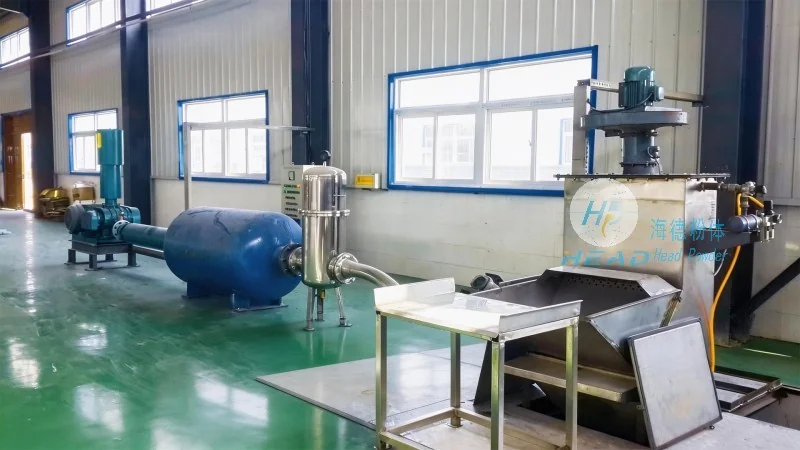
Shandong HeadPowder Engineering Co., Ltd. has successfully implemented pneumatic conveying systems for foam plastic in various industrial applications, including automotive parts manufacturing and packaging. In one project, the company designed a positive pressure system for transporting polystyrene foam components. By optimizing the air velocity to 25 m/s, using 150mm diameter pipelines, and incorporating a feed hopper with an agitator, the system achieved a 95% reduction in blockage incidents compared to traditional designs. The client reported improved production efficiency and reduced maintenance costs, highlighting the effectiveness of the key design parameters.
Conclusion: Optimizing Pneumatic Conveying for Foam Plastic
Preventing blockages in pneumatic conveying systems for foam plastic requires a comprehensive approach that considers the material’s unique properties and the system’s design parameters. By carefully selecting air velocity, pipeline sizing, feed conditions, and system controls, as demonstrated by Shandong HeadPowder Engineering Co., Ltd., operators can ensure smooth, efficient material transport. The company’s expertise in engineering customized pneumatic conveying solutions for foam plastic applications continues to help clients overcome the challenges of handling these lightweight materials, improving overall operational performance and reducing downtime.