

What is a Ceramic Powder Pneumatic Conveying System? And What Are Its Design Principles?
Understanding ceramic powder pneumatic conveying systems is essential for industries dealing with fine powders, as these systems offer efficient and reliable methods for transporting materials. A ceramic powder pneumatic conveying system is a specialized equipment setup designed to move dry, fine ceramic powders through a pipeline using air or other gas as the conveying medium. This technology is widely used in various industrial applications where traditional bulk material handling methods may be impractical or inefficient.

HeadPowder, a leading manufacturer in the field, specializes in developing and supplying high-quality pneumatic conveying solutions tailored to the unique needs of ceramic powder processing. With a strong focus on engineering excellence and customer satisfaction, Shandong HeadPowder Engineering Co., Ltd. has established itself as a trusted partner for businesses seeking reliable and efficient material handling systems. The company's headquarters is located in Shandong, China, where its team of experienced engineers and technicians work diligently to design, manufacture, and deliver cutting-edge pneumatic conveying equipment.
Design Principles of Ceramic Powder Pneumatic Conveying Systems
The core design principle of a ceramic powder pneumatic conveying system revolves around the use of air pressure to transport particles. The system typically consists of several key components, including a material feeder, a conveying line, a separator, and a dust collector. The material feeder is responsible for introducing the ceramic powder into the system at a controlled rate, ensuring a consistent flow of material. The conveying line, often made of materials resistant to abrasion and corrosion, transports the powder and air mixture. The separator then separates the powder from the air, allowing the powder to be deposited at the destination, while the air is either recirculated or discharged through a dust collector to prevent environmental contamination.

One of the primary design considerations is the air velocity within the conveying line. The velocity must be sufficient to keep the powder particles suspended and prevent them from settling or clogging the pipeline. This requires careful calculation of the air flow rate and pressure, which are determined based on the particle size, density, and moisture content of the ceramic powder. Additionally, the system's design must account for the potential for particle agglomeration, which can occur if the powder is too dry or if the air flow is insufficient. To mitigate this, some systems incorporate features such as pulse jets or vibration to maintain particle suspension and ensure smooth operation.
How the System Operates
The operation of a ceramic powder pneumatic conveying system begins with the feeding of the ceramic powder into the material feeder. The feeder then meters the powder into the conveying line, where it is mixed with compressed air. The air, flowing at a high velocity, lifts and transports the powder particles through the pipeline. As the mixture travels to the destination point, it passes through a separator, which uses centrifugal force or other methods to separate the powder from the air. The separated powder is then collected in a hopper or storage bin, while the air is directed to a dust collector for filtration and recycling. The filtered air is then returned to the system or released into the environment, depending on the system's design and local regulations.

Advantages of Ceramic Powder Pneumatic Conveying Systems
Compared to traditional mechanical conveying methods, ceramic powder pneumatic conveying systems offer several significant advantages. First, they are highly efficient in terms of material handling, as they can transport large quantities of powder over long distances with minimal energy consumption. The system's design allows for continuous operation, reducing downtime and increasing productivity. Additionally, pneumatic conveying systems are less prone to material degradation, as the powder is not subjected to the friction and impact associated with mechanical conveyors. This is particularly important for ceramic powders, which can be sensitive to moisture and physical damage.
Another key advantage is the flexibility of the system. Ceramic powder pneumatic conveying systems can be easily adapted to different applications and process requirements. The system can be configured to handle various particle sizes and types, and the conveying line can be adjusted to accommodate different distances and layouts. This flexibility makes the system suitable for a wide range of industrial settings, from small-scale production lines to large-scale manufacturing facilities.
Applications in Ceramic Processing
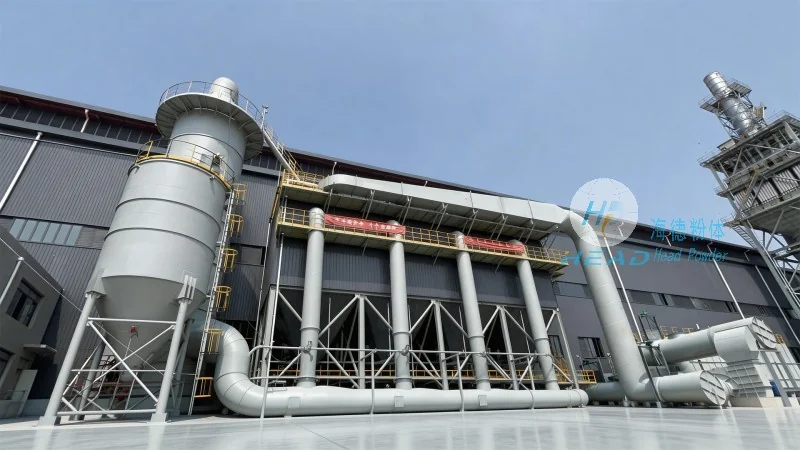
Ceramic powder pneumatic conveying systems are widely used in the ceramic industry for various applications, including raw material transport, glaze application, and waste handling. In raw material processing, the system efficiently transports ceramic powders from storage silos to production lines, ensuring a consistent supply of materials. During glaze application, the system can deliver glaze powders to spray guns or applicators, providing precise control over the coating process. For waste management, the system can collect and transport ceramic waste from production areas to disposal or recycling facilities, reducing the risk of contamination and improving safety in the workplace.
HeadPowder's Commitment to Quality and Service
Shandong HeadPowder Engineering Co., Ltd. is committed to providing high-quality ceramic powder pneumatic conveying systems that meet the highest standards of performance and reliability. The company's engineering team uses advanced design software and rigorous testing procedures to ensure that each system is optimized for the specific requirements of the customer. HeadPowder's products are manufactured using premium materials and components, ensuring long service life and minimal maintenance. The company also offers comprehensive after-sales support, including installation, training, and maintenance services, to ensure that customers can maximize the benefits of their investment.