

Operation Process and Working Principle of Aluminum Dross Pneumatic Conveying Equipment
Aluminum dross, a byproduct of aluminum smelting and processing, poses significant challenges in handling and transportation due to its high moisture content, abrasive nature, and tendency to clump. Traditional methods like manual handling or mechanical conveyors often result in inefficiencies, equipment wear, and safety hazards. To address these issues, pneumatic conveying systems have emerged as a reliable solution for aluminum dross transportation, offering advantages such as reduced labor costs, improved safety, and enhanced process control. This article delves into the operation process and working principle of aluminum dross pneumatic conveying equipment, highlighting its key components, operational steps, and the technical advantages that make it an essential asset in aluminum processing facilities, manufactured by Shandong HeadPowder Engineering Co., Ltd. (headpowder).
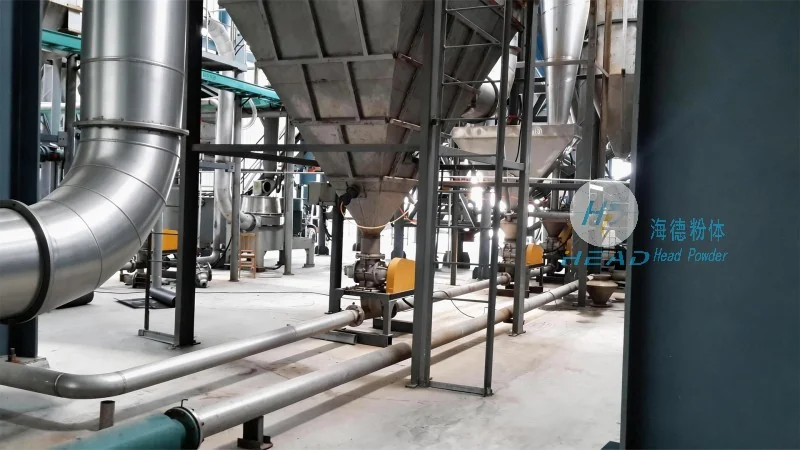
Key Components of Aluminum Dross Pneumatic Conveying Systems
The aluminum dross pneumatic conveying system typically consists of several critical components that work in tandem to ensure efficient material transport. The primary components include a hopper for material storage, a rotary valve or feeder to control the flow of dross into the system, a conveying pipeline (often equipped with bends and straight sections), a blower or air compressor to generate the necessary air pressure, a filter or separator to remove dust and particles from the exhaust air, and a discharge hopper or collection tank at the receiving end. Each component plays a vital role in maintaining the system's performance and ensuring the safe and efficient movement of aluminum dross.
Operation Process of Aluminum Dross Pneumatic Conveying Equipment
The operation of aluminum dross pneumatic conveying equipment follows a systematic sequence of steps designed to handle the material from the source to the destination. The process begins with the loading of aluminum dross into the inlet hopper. The rotary valve or feeder then regulates the flow of dross, controlling the amount of material introduced into the conveying pipeline. Simultaneously, the blower or air compressor generates a high-pressure air stream, which is introduced into the pipeline through an air inlet. As the air flows through the pipeline, it carries the aluminum dross particles along with it, creating a slurry-like mixture that moves towards the discharge point. The conveying pipeline may include bends, elbows, or other fittings to navigate the path from the source to the receiving hopper. At the receiving end, the air and dross mixture passes through a filter or separator, where the air is purified and discharged, while the aluminum dross is collected in the discharge hopper. The entire process is typically automated, with sensors and control systems monitoring the flow rate, pressure, and other parameters to ensure optimal performance and prevent system failures.

Working Principle of Aluminum Dross Pneumatic Conveying Systems
The working principle of aluminum dross pneumatic conveying systems is based on the fundamental concept of fluidization and particle suspension. The system utilizes compressed air to create a high-velocity air stream that entrains the aluminum dross particles, lifting them off the conveying pipeline and transporting them through the system. The key to efficient conveying lies in achieving the right balance between air velocity and material flow rate. If the air velocity is too low, the dross particles may settle and cause blockages in the pipeline. Conversely, if the air velocity is too high, excessive energy consumption occurs, and the system may become inefficient. The system's design, including the size of the pipeline, the type of air inlet, and the configuration of bends and fittings, is carefully engineered to optimize the air flow and ensure the stable transport of aluminum dross. Additionally, the use of appropriate air filtration and separation systems is crucial to maintain the cleanliness of the exhaust air and prevent dust accumulation in the system components.

Advantages of Aluminum Dross Pneumatic Conveying Equipment
Aluminum dross pneumatic conveying equipment offers several advantages over traditional handling methods, making it a preferred choice for aluminum processing facilities. One of the primary benefits is the reduction in labor costs, as the system automates the entire conveying process, minimizing the need for manual handling. This not only improves operational efficiency but also enhances workplace safety by eliminating the risks associated with manual dross handling. Another significant advantage is the improved process control, as the system allows for precise regulation of the material flow rate and pressure, ensuring consistent and reliable transportation of aluminum dross. The equipment also reduces equipment wear and tear compared to mechanical conveyors, as the pneumatic system minimizes friction and impact on the material and components. Furthermore, the system's compact design and flexibility in layout make it suitable for various plant configurations, allowing for easy integration into existing aluminum processing facilities.
Applications and Industries
Aluminum dross pneumatic conveying equipment is widely used in various industries that involve aluminum processing, including aluminum smelting, casting, and recycling. In aluminum smelting plants, the equipment is used to transport dross from the melting furnaces to the dross treatment and recycling units. In casting facilities, it helps move dross from the casting molds to the processing areas for further treatment. In recycling plants, the system is essential for transporting dross from the collection points to the processing equipment, where it is melted and refined into new aluminum products. The versatility of the pneumatic conveying system makes it suitable for handling different types of aluminum dross, including fine and coarse particles, and it can be adapted to various plant sizes and production capacities.