

Operation Process and Working Principle of a Pneumatic Conveying System for Lithium-Ion Battery Powd
HeadPowder, a leading engineering company based in Shandong, China, specializes in the design and implementation of advanced pneumatic conveying systems tailored for the handling of lithium-ion battery powder materials. This article provides a detailed overview of the operation process and working principles of such a system, highlighting the technical aspects and operational efficiency that define modern material handling solutions for the battery manufacturing industry.

System Overview and Core Components
The pneumatic conveying system for lithium-ion battery powder materials is a sophisticated piece of equipment engineered to transport fine powders like cathode active materials, anode powders, and other battery components with precision and reliability. The system typically consists of several key components, including a material hopper for storage, a rotary valve for controlled discharge, a conveying line (often equipped with pulse-jet filters or cyclone separators for dust control), a vacuum or pressure blower, and a discharge outlet for material delivery. Each component plays a critical role in ensuring the smooth and efficient movement of the powder from the source to the destination, minimizing material loss and maintaining product integrity.
Working Principle of the Pneumatic Conveying System
The fundamental principle behind the pneumatic conveying system is the use of air flow to transport solid particles. In a typical pressure system, compressed air is introduced into the conveying line, creating a pressure differential that propels the powder particles forward. The material is fed into the system through a hopper and rotary valve, where it is then entrained by the air stream as it travels through the pipeline. The system may employ either positive pressure (where air is blown into the line) or negative pressure (where air is drawn out), depending on the specific application and material characteristics. For lithium-ion battery powders, which are often fine and abrasive, the system is designed to handle these properties while preventing clogging or degradation of the material.
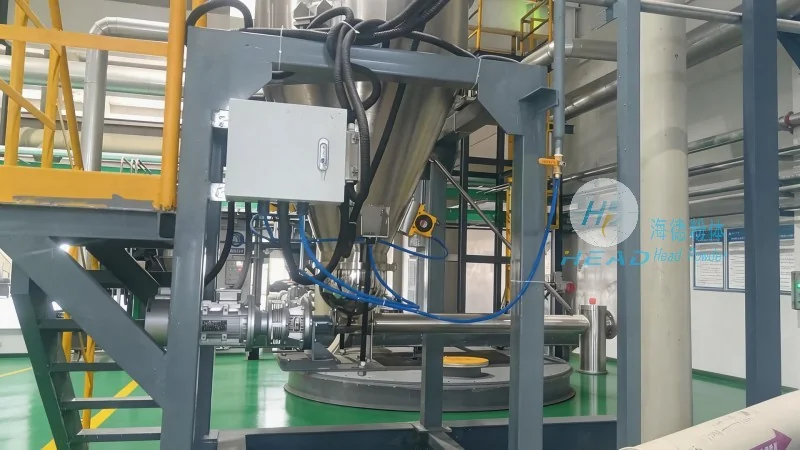
Operation Process: Step-by-Step Execution
The operation of the pneumatic conveying system for lithium-ion battery powder materials follows a systematic sequence to ensure consistent and reliable performance. The process begins with the loading of the powder into the storage hopper. Once the hopper is filled, the rotary valve is activated to control the flow rate of the material into the conveying line. Simultaneously, the blower or compressor is started, generating the necessary air pressure to initiate the conveying process. As the powder is fed into the line, it is entrained by the air and transported to the discharge point, where it is collected in a receiving hopper or directly into the production line. The system continuously monitors air pressure, flow rate, and material level to maintain optimal operation. If any abnormalities are detected, such as a blockage or pressure drop, the system automatically triggers safety protocols to prevent damage to equipment or material loss.

Technical Advantages and Industry Applications
HeadPowder's pneumatic conveying systems for lithium-ion battery powders offer several technical advantages that make them ideal for modern battery manufacturing facilities. These include high material transfer efficiency, with minimal loss and contamination, which is crucial for maintaining the quality of battery components. The systems also provide flexibility in terms of conveying distance and layout, allowing for integration into existing production lines without major modifications. Additionally, the use of enclosed systems helps to control dust and fume emissions, ensuring compliance with environmental regulations and improving workplace safety. The technology is widely applied in the production of lithium-ion batteries, from the handling of raw materials to the transfer of finished components, supporting the entire battery manufacturing process with precision and reliability.
Conclusion and Company Expertise
HeadPowder Engineering Co., Ltd., based in Shandong, China, is a trusted provider of pneumatic conveying solutions for the lithium-ion battery industry. By leveraging advanced engineering and technical expertise, the company designs and implements systems that meet the specific demands of battery powder handling, ensuring operational efficiency, product quality, and compliance with industry standards. The operation process and working principles outlined in this article demonstrate the sophistication and reliability of modern pneumatic conveying systems, which are essential for the efficient and safe production of lithium-ion batteries.