

Introduction to Mica Powder Pneumatic Conveying Systems: Structure and Working Principles
Mica powder, a widely used industrial material, often requires efficient and reliable transportation methods to ensure consistent quality and minimize material loss. The pneumatic conveying system for mica powder is a specialized solution designed to handle this fine powder with precision. This article provides an introduction to the structure and working principles of such systems, highlighting their importance in industrial applications.

Key Components and Structure of the Pneumatic Conveying System
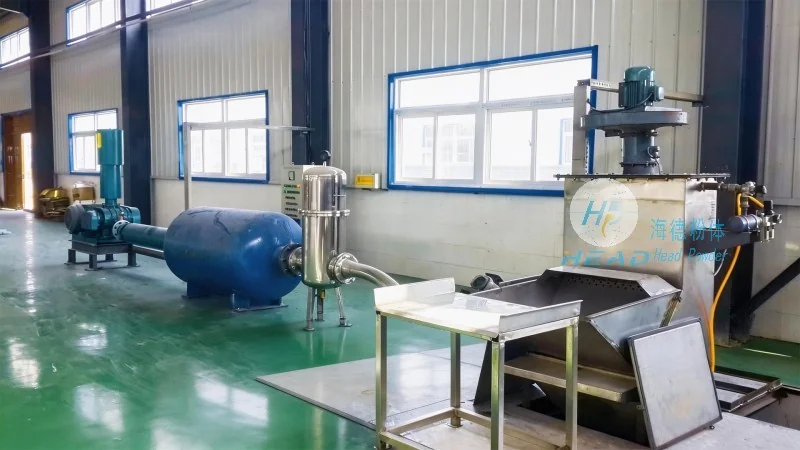
The mica powder pneumatic conveying system typically consists of several core components that work in tandem to transport the material. The main parts include the material hopper, feeder, air compressor, conveying line, and receiver. Each component plays a crucial role in the overall operation. The material hopper is where the mica powder is stored and fed into the system. It is designed with a hopper shape to ensure uniform material flow. The feeder, often a rotary valve or a screw feeder, controls the discharge rate of the powder from the hopper. This control is essential to maintain a stable air-powder ratio, which is critical for efficient conveying. The air compressor generates the necessary pressure and volume of air to move the powder through the conveying line. The conveying line, usually made of stainless steel or other corrosion-resistant materials, is designed to withstand the abrasive nature of mica powder. The receiver is the final container where the conveyed mica powder is deposited. It is equipped with a dust collection system to prevent particle loss and maintain environmental compliance.

Working Principles of the Pneumatic Conveying Process
The operation of the mica powder pneumatic conveying system follows a systematic process. The sequence begins with the material being fed from the hopper into the conveying line. As the air compressor supplies high-pressure air, the air and powder mixture is created. The air velocity in the line must be sufficient to overcome the gravitational force and frictional resistance of the powder particles. This creates a slurry-like flow where the powder is suspended in the air stream. The conveying line transports the mixture to the receiver, where the air is separated from the powder. The air is typically filtered and recycled back to the compressor, while the mica powder is collected in the receiver. The system operates continuously, with the feeder controlling the feed rate to match the air flow, ensuring a stable and efficient conveying process. The design of the system, including the air velocity and line diameter, is optimized to minimize pressure drop and energy consumption while maximizing conveying efficiency.
Company Profile: Shandong HeadPowder Engineering Co., Ltd.
Headpowder, the manufacturer of these advanced pneumatic conveying systems, is a leading company in the field of powder handling technology. Based in Shandong, China, Headpowder specializes in designing and manufacturing customized solutions for various industrial powders, including mica. The company's expertise lies in understanding the unique properties of different powders and tailoring the conveying systems to meet specific operational requirements. With a focus on quality and reliability, Headpowder's systems are engineered to provide long-term performance and minimal maintenance. The company's commitment to innovation ensures that their products remain at the forefront of pneumatic conveying technology, offering solutions that enhance productivity and reduce operational costs for their clients.

Applications and Benefits of Mica Powder Pneumatic Conveying Systems
The mica powder pneumatic conveying systems are widely used in various industries where fine powders need to be transported efficiently. These include the construction industry for mica-based coatings and fillers, the electrical industry for mica insulation materials, and the cosmetics industry for mica-based pigments. The benefits of using a pneumatic conveying system for mica powder include improved material handling efficiency, reduced dust exposure, and enhanced product quality. The system's ability to handle fine powders without segregation or agglomeration ensures that the mica powder maintains its desired properties throughout the conveying process. Additionally, the closed system design minimizes environmental impact by preventing dust emissions and ensuring safe material handling. The systems are also designed for easy integration into existing production lines, making them a practical solution for industries looking to upgrade their material handling processes.